Gathering information in a patient-centred consultation

LO: Demonstrate effective verbal and non-verbal communication behaviour that builds the relationship from the opening of a consultation

Negotiation of agenda

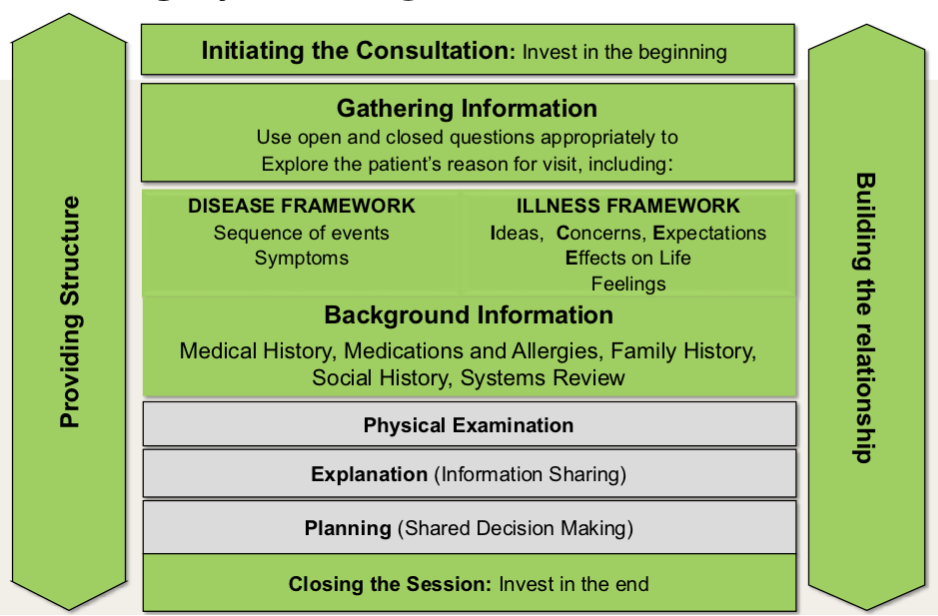
Calgary Cambridge guide

481

Gathering information

Disease/illness model

flowchart LR
	subgraph Disease
		Symptoms
		A[Medical history]
		B[Medication history]
		Allergies
		C[Social history]
		D[Family history]
		Lifestyle
		E[Systems review]
	end
	
	subgraph Illness
		Ideas
		Concerns
		Expectations
		F[Effects on life]
		Feelings
	end

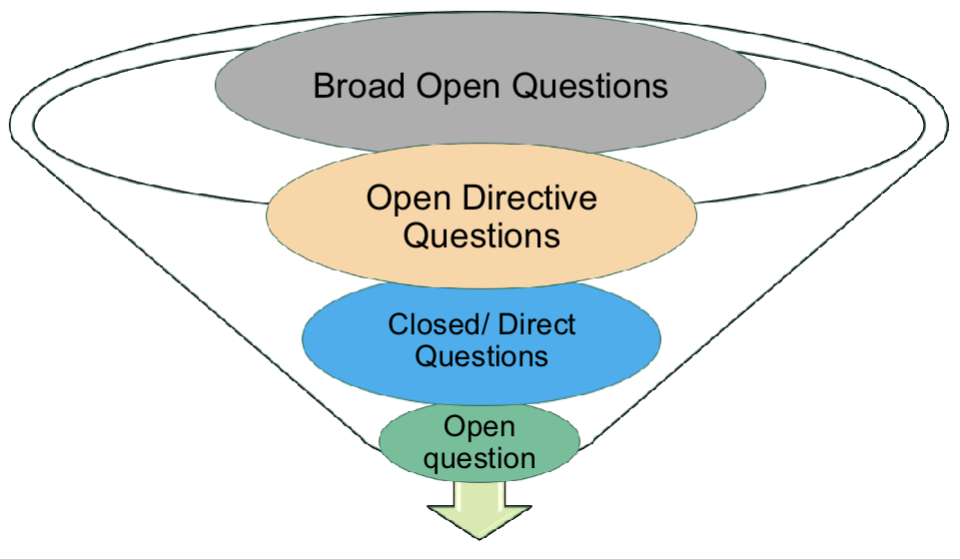
Open-to-closed cone style of question

526

Open questions

Closed questions

SOCRATES Question
Site Can you point to where it hurts?
Onset When did it start?
Character Can you describe what sort of pain it is?
Radiation Does the pain go anywhere else?
Associated symptoms Have you noticed anything else?
Timing How long does it last for?
Exacerbating/relieving factors Does anything make it better/worse?
Severity On a scale of 1-10, how bad is it? 10 is worst pain imaginable

Systems review

LO: Demonstrate a patient-centred approach, including behaviours that show respect for and interest in the patient

LO: Demonstrate the communication skills required to explore the patient's experience of their health concern (illness perspective) alongside eliciting the clinical information

Multiple questions

Leading questions

LO: Demonstrate active listening and observation skills

LO: Gather accurate and comprehensive clinical information to elicit a chronological and complete patient account