Examination of lower limb
General examination
- Look at whole patient
- Note any aids or orthoses
Standard examination
- Compare both sides
Look - standing
- Positioning
- Undress
- Standing
- Space
- Look from anteriorly (front), laterally (side) and posteriorly (back)
- Skin
- Posture and symmetry
- Bony structures
- Muscle bulk
Look - lying
- Square on bed
- Assess limb length
- Discrepancy?
- Apparent shortening?
- Legs should be parallel
- Measure from fixed point
- True shortening?
Feel
- Hurts?
- Bony landmarks
Move
Active
-
Flexion
-
Stabilise iliac crest with one hand
-
Bend their knees and bring to stomach
-
Normal range is 0
-120 -
Extension - don't do if there was fixed flexion deformity
-
Position patient prone (laying on stomach)
-
Stretch leg out behind them
-
Normal 15
-20 -
Abduction
-
Immobilise pelvis by putting hand on opposite iliac crest
-
Move leg out to the side
-
Minimum 45
-60 -
Pelvis with rise from couch when full abduction reached
-
Adduction
-
Fix pelvis
-
Abduct opposite leg
-
Move leg that is being tested over the opposite ankle or under the opposite leg
-
Normal is 45
-
Rotation
-
Knee flexed or extended
| Flexed | Extended |
|---|---|
| Flex hip to 90 | Roll leg inwards (internal) |
| Use tibia as pointer | Roll leg outwards (external) |
| Turn foot in (external) | 60 |
| Turn foot out (internal) |
Thomas' test (fixed flexion deformity)
- Patient supine - laying on back
- Place one hand beneath lumbar spine
- Flex hips and knees
- Passive flexion of the normal knee to flatten the lumbar tordosis
- Lower affected leg towards bed
- Note where it stops
- Limb as a pointer to ascertain degrees of flexion
Passive
- When active movement seems reduced
- Same movement but gently assist
Resistance
-
Quadriceps (flexors)
-
Bring knee up to chest against your hand
-
Hip extension (gluteus maximus)
-
Leg straight and elevated, push leg back onto couch against resistance
-
Adductors
-
Leg abducted, move inwards against your hand
-
Abductors
-
Legs together, move outwards against hand
Gait
- Watch them walk away you
- Then walk towards you
Trendelenburg's Test
- Weakness of hip abductors
- Patient stands facing you
- Ask to hold your hands
- Gently lift one foot from the floor
- If good leg is lifted they should squeeze your hand on their bad side
- Pelvis will tilt on weight-bearing leg towards the good side
- Repeat lifting the bad leg, there will be no squeeze and no tilt
Knee examination
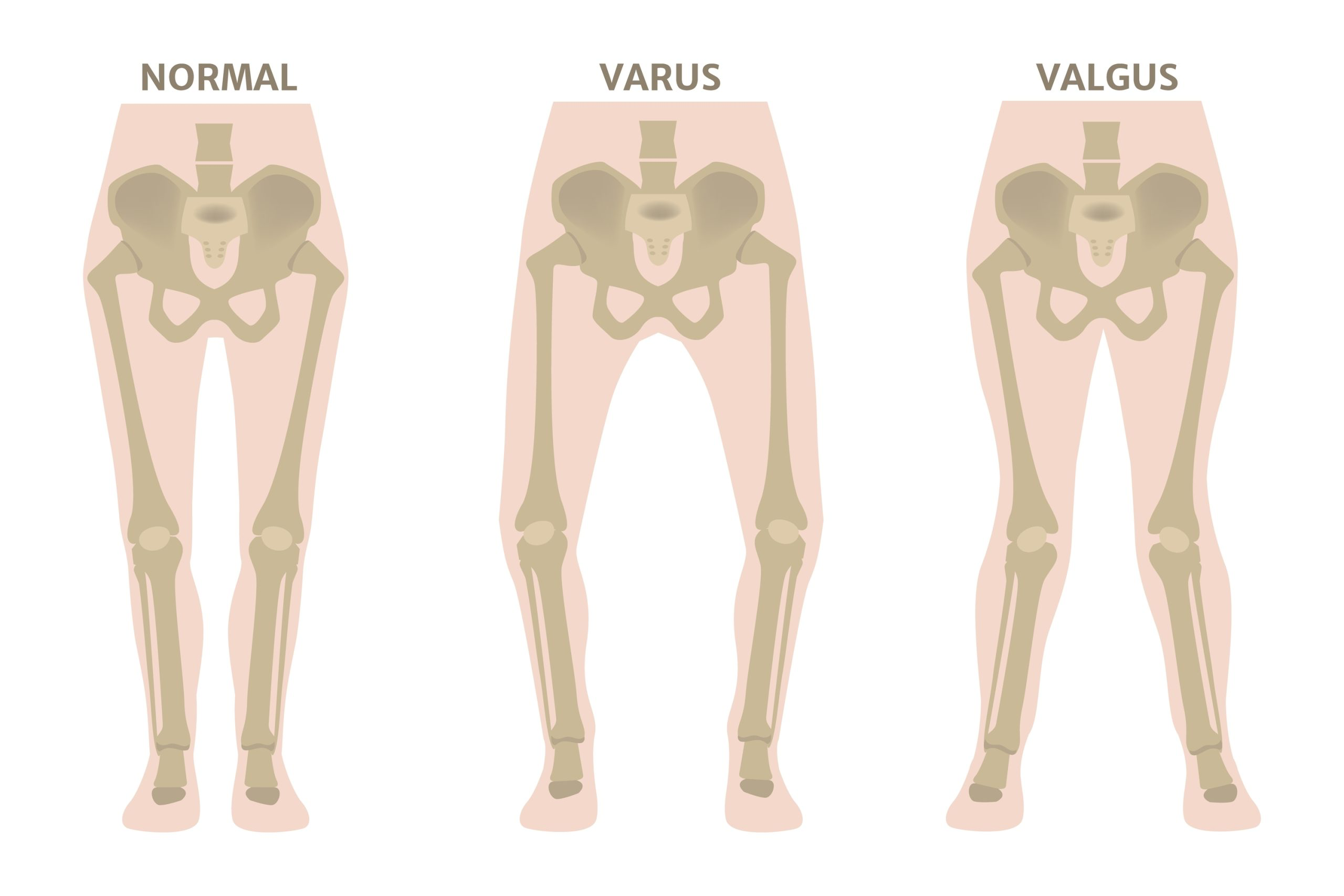
Look
- 3 angles
- Skin
- Posture/symmetry
- Muscle bulk
- Joint swelling
- Bony structures
Feel
- Hurts?
- Temperature/tenderness behind knee
- Patella, joint line, condyles, tibial tuberosity, head of fibula
- Effusion (fluid escape) - bulge sign, patella tap
Move
-
Crepitus - sounds
-
Flexion
-
Bring foot up towards bottom
-
Normal - calf touching thigh
-
Extension
-
Place hand behind patient knee and push their knee down onto couch
-
Normal - 10
beyond straight limb -
Hyperextension
-
Hold patient's foot and lift leg up
-
Look for hyperextensions - wrong bending greater than 15
-20 -
Cruciate ligaments
-
Place knee in a flexed position and stabilise foot
-
Check hamstrings relaxed
-
Test anterior cruciate ligament by grasping tibia and drawing it forward
-
Test posterior cruciate ligament by pushing tibia backwards
-
Collateral ligaments
-
Support relaxed knee in slight flexion
-
Stabilise upper leg
-
Test lateral collateral by moving lower leg medially
-
Test medial collateral by moving lower leg more lateral
Ankle and foot examination
Look
-
Skin
-
Posture/symmetry
-
Bony structures
-
Joint swelling
-
Muscle bulk/achilles tendon
-
Gait
-
Hindfoot - valgus or varus
-
Arch
-
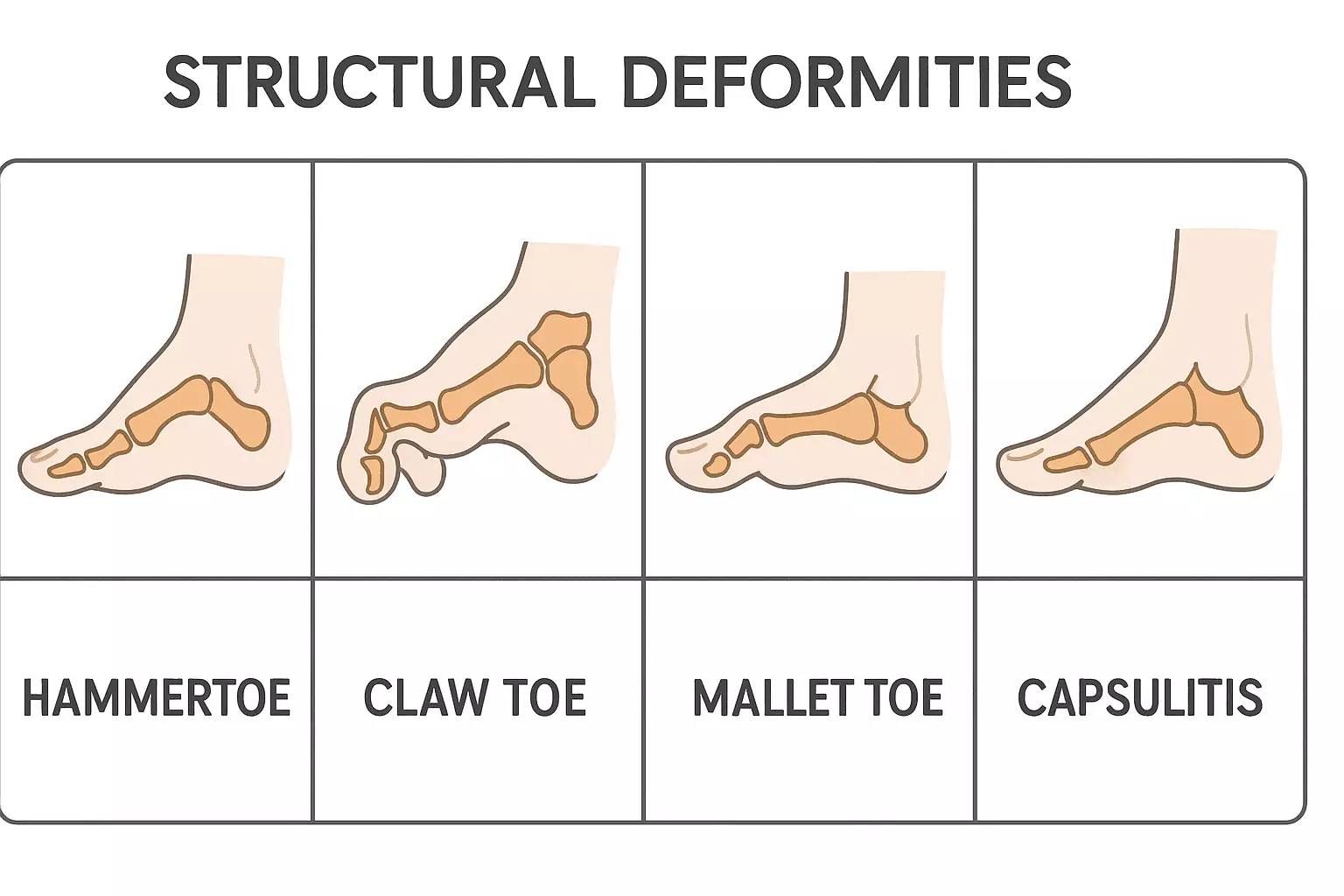
Forefoot - toes
-
Claw toe involved abnormal position of all three joints in toe
-
Extension contracture with dorsal subluxation of the metatarsophalangeal (MTP) joint with flexion deformities of proximal and distal interphalangeal (P/DIP) joints
-
Hammer toe - extension of the MTP joints and DIP joints. PIP joints hyperflexed
-
Mallet toe - flexed DIP joint
-
Lying
-
Callus formation
-
Footwear
Feel
- Hurts?
- Temperature/pulse/MTP squeeze/tenderness
- Lateral/medial malleolus
- Calcaneus
- 5th metatarsal base
- Medial longitudinal arch
- Joints
Move
-
Fix joints that are not being assessed
-
Ankle/hindfoot - stabilise distal tibia and move heel
-
Midfoot - stabilise the talus and move the forefoot
-
Assess toes
-
Move individual toes
-
Active movement reduced, test passive movements
-
Extension/dorsiflexion
-
Bring toes towards self
-
30
is normal -
Flexion/plantar flexion
-
Point toes down
-
60
is normal -
Inversion
-
Roll foot in
-
30
is normal -
Eversion
-
Roll foot out
-
Normal is 10
-20 -
Examine
-
Achilles tendon
-
Rest of limb
-
Pulses
-
Reflexes
-
Knee