Bone formation
LO: Describe the normal structure of bone and how it is maintained
Bone deformation
- Compression
- Tension
- Shear (torsion)
- Weight and gravity
- Muscles and tendons
Bone types
- Trabecular (spongey/cancellous) bone

- Corticol bone - hard
Composition of bone
- 22% organic: 90% Type I collagen, bone proteoglycan, cells
- 70% inorganic: Ca, P, Mg, Na, K
- 8% water
Bone cells
- Osteo - bone
- Osteoblast - formation
- Osteoclast - resorption
- Bone lining cell - protection and communication
- Osteocyte - communication
- Chondrocyte - bone growth
Bone remodelling
Activation
- Micro crack
- Deformation
- Osteocytes in bone
- Pre-ostoclasts - osteoclasts
Resorption
- Osteoclasts fuse with crack, breakdown of damage
- Osteoclast apoptosis
- Resorption cavity
Formation
- Osteoblasts release osteoid to fill in cavity with newly mineralised bone
Mineralisation
- Newly mineralised bone hardens and osteocytes embedded
Quiescence
- Bone resorbed - bone formed
Regulatory factors
- Bisphosphonates
- Sclerostin
- Oestrogen
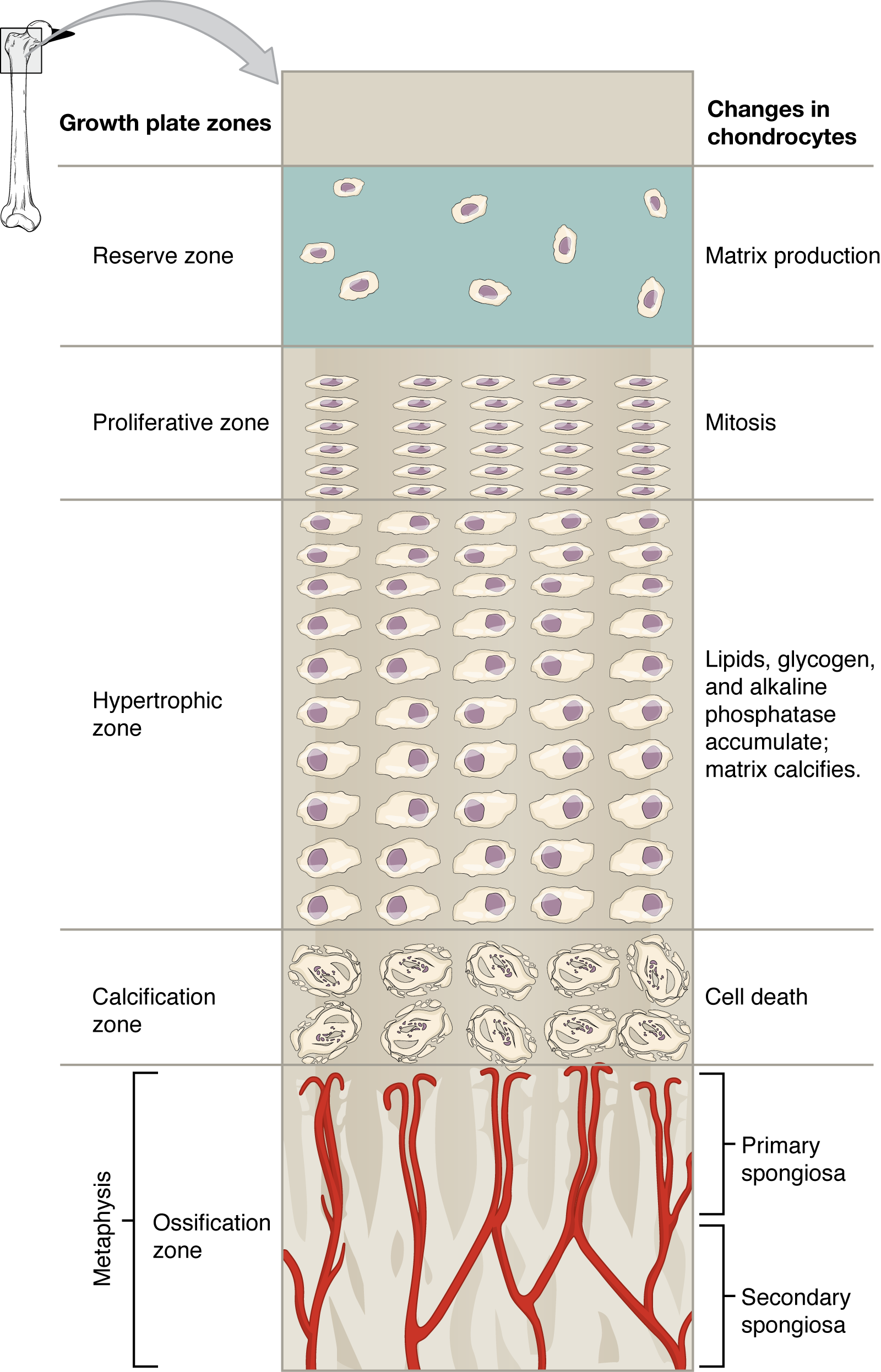
Endochondral ossification
- Growth plates - long bones
- Grow from ends to centre - pushes bone out to grow
Intramembranous ossification
- Embryological development - flat bones
Bone imaging
DXA (DEXA) scan
- Diagnosis of osteoporosis
- Bone density
Peripheral Quantitative Computed Tomography (pQCT)
- Structure of bone
- Research tool
Techniques
- Bone biopsies and histomorphometry
- Caclification of osteoid
- Osteoblast, osteoclast and osteocyte number
- Trabecular connectivity
Biomarkers
- Pro-collagen 1 peptides - P1NP and P1CP
- Alkaline phosphatase
- Osteocalcin
- Collagen type 1 fibre components - telopeptides CTX/NTX